
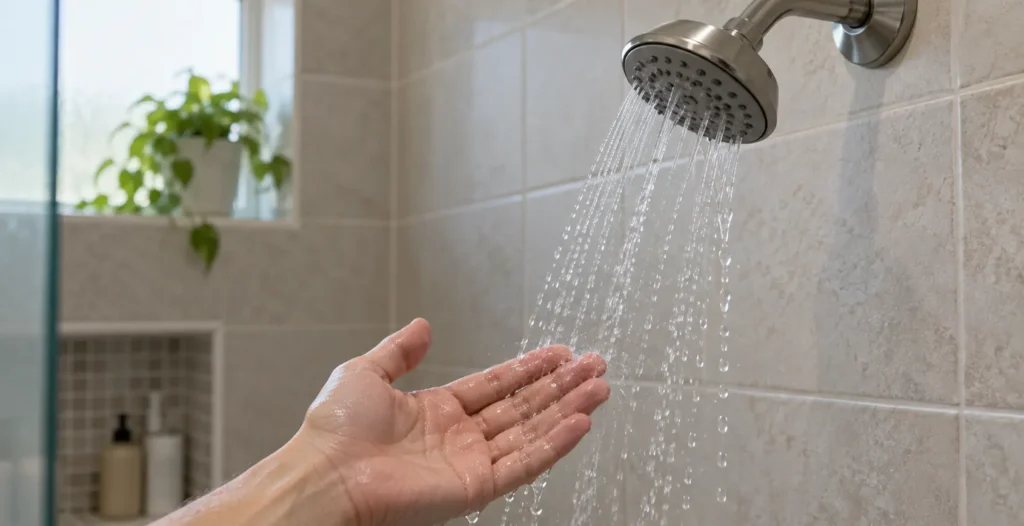


A shower with weak water pressure can be frustrating. You may notice that the water comes out slowly, takes longer to rinse shampoo, or feels weaker than it used to.
The good news is that low shower pressure does not always mean you have a major plumbing problem. A clogged showerhead, partially closed valve, or kinked hose may be all that is causing the issue.
Before calling a plumber, check a few common causes. These simple checks can help you understand where the problem is coming from.
First, Check How Widespread the Problem Is
Start by turning on other faucets and showers in your home.
This quick test can tell you whether the problem is limited to one shower or affects your entire plumbing system.
| What you notice | What it may mean |
|---|---|
| Only one shower has low pressure | Problem with the showerhead, hose, valve, or nearby pipe |
| All faucets have low pressure | Possible main supply, valve, regulator, or plumbing issue |
| Pressure drops when another fixture runs | Water demand may be affecting flow |
| Pressure suddenly became weak | Possible leak, valve issue, or water supply problem |
| Pressure has slowly decreased | Mineral buildup, corrosion, or aging pipes may be involved |
Example: If your kitchen faucet has strong water flow but your shower does not, the problem is probably somewhere around the shower rather than the main water supply.
This simple test should be your first step.
A Clogged Showerhead Can Reduce Water Flow
A clogged showerhead is one of the easiest problems to fix.
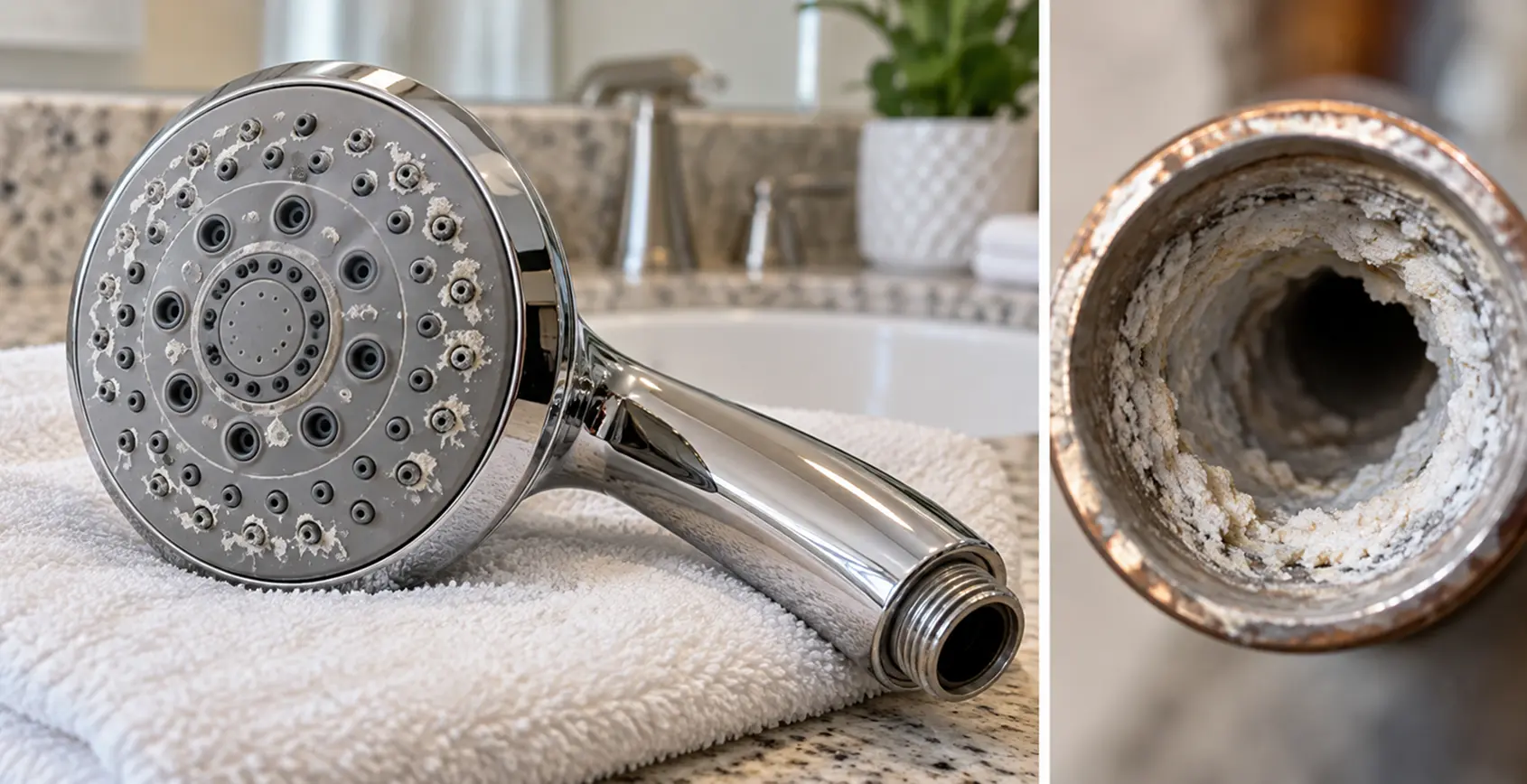
Minerals can build up inside the tiny holes of the showerhead. This is more common in areas with hard water.
You may notice:
- White or chalky deposits around the holes
- Water spraying in different directions
- Several shower holes producing little or no water
- A gradual decrease in water flow
Example: Your shower worked normally when it was installed. Six months later, the stream feels much weaker. Mineral buildup could be blocking the openings.
What you can do
If the showerhead is removable:
- Remove the showerhead.
- Soak it in white vinegar.
- Leave it for several hours.
- Rinse it thoroughly.
- Gently clean the openings.
- Reinstall it and test the water.
If the showerhead is badly clogged or damaged, replacing it may be easier.
The Shower Valve May Not Be Fully Open
A partially closed valve can restrict water flow.
This can happen after plumbing work or maintenance. Someone may have turned off the water and not fully reopened the valve.
Check any accessible valve that controls water to the shower.
A typical round valve is usually fully open when turned counterclockwise. A lever-style valve is generally open when the handle is aligned with the pipe.
Do not force a stuck valve.
Older valves can become damaged or corroded. Trying to force one open could cause a leak.
If the valve does not move easily, ask a plumber to inspect it.
Check the Shower Hose for Kinks
Do you have a handheld showerhead?
If yes, inspect the flexible hose.
A bent or crushed hose can restrict water flow. This is particularly common when the hose gets twisted or pressed against the shower wall.
Look for:
- Sharp bends
- Kinks
- Cracks
- Bulges
- Damaged connections
Straighten the hose and test the shower again.
If the hose is damaged, replacing it may restore normal flow.
Your Main Water Valve Could Be Partly Closed
Your home’s main water valve controls the water entering the property.
If this valve is not completely open, water pressure can be low throughout the house.
This can happen after:
- Plumbing repairs
- Home renovations
- Water supply maintenance
- Emergency water shutoff
- Work on the main water line
Check the valve if it is easily accessible.
However, do not force an old or stuck valve. The valve may have internal damage even if it looks fine from the outside.
If you are unsure about its condition, have a plumber inspect it.
A Pressure Regulator May Be Causing Problems
Some homes have a pressure-reducing valve, also called a pressure regulator.
It controls the pressure entering your plumbing system. This helps protect pipes and fixtures from excessive pressure.
If the regulator starts to fail, your home’s water pressure may become too low.
You may notice:
- Low pressure at several fixtures
- Pressure that changes unexpectedly
- A gradual decrease in water flow
- Weak water flow even when only one fixture is running
A plumber can test the pressure and check whether the regulator is working correctly.
Avoid adjusting the regulator without knowing what you are doing. Incorrect pressure settings can cause other plumbing problems.
Hard Water Can Cause Mineral Buildup
Hard water contains minerals such as calcium and magnesium.
These minerals can leave deposits inside plumbing fixtures over time.
The showerhead is often affected because it has many small openings.
Signs of mineral buildup include:
- White deposits around faucets
- Chalky buildup on the showerhead
- Spots on glass shower doors
- Reduced water flow
- Scale around plumbing fixtures
A clogged showerhead is easy to clean. Mineral buildup inside the pipes is more complicated.
If several fixtures have gradually developed poor flow, the plumbing itself may need to be checked.
A Hidden Leak Can Affect Water Pressure
A significant leak can reduce the amount of water reaching your fixtures.
Some leaks are easy to see. Others can occur behind walls, under floors, or underground.
Look for warning signs such as:
- Damp walls or ceilings
- Water stains
- Wet areas around pipes
- Mold or a musty smell
- Unexplained increases in your water bill
- The sound of running water when no fixture is on
Example: You turn off every faucet but can still hear water running inside a wall. There could be a hidden leak.
A leak should not be ignored. Even a small leak can cause expensive water damage over time.
Older Pipes May Restrict Water Flow
The plumbing in an older home may affect water pressure.
Over many years, pipes can develop:
- Corrosion
- Mineral deposits
- Rust
- Sediment buildup
- Internal narrowing
As deposits build up, the space inside the pipe becomes smaller. Less water can then pass through.
Example: Your shower pressure was good when you moved into an older home. Over several years, the pressure gradually became weaker. Aging or restricted pipes could be part of the problem.
If several fixtures are affected, a plumber can inspect the plumbing system and determine whether the pipes are contributing to the issue.
Other Fixtures May Be Using Too Much Water
Your shower may feel weak when several fixtures are running at the same time.
For example, someone may be:
- Running the washing machine
- Using another shower
- Flushing a toilet
- Running the dishwasher
- Using a faucet
This increases water demand.
Try taking a shower when no other major fixture or appliance is using water.
If the pressure improves, your plumbing system may simply have reduced flow when several fixtures operate at once.
If the pressure remains low even when the shower is the only fixture running, look for another cause.
Your Showerhead May Be Designed for Low Flow
Sometimes there is nothing wrong with your plumbing.
The showerhead itself may be designed to use less water.
Low-flow showerheads are made to reduce water consumption. They may produce a different type of spray compared with older or high-flow models.
Check whether you recently replaced your showerhead.
Also check its specifications. A new showerhead with a lower flow rate may feel weaker even though it is working correctly.
Some showerheads also contain flow restrictors.
Do not assume that removing a flow restrictor will solve the problem. The component may be part of the showerhead’s intended design.
Your Local Water Supply May Be Affected
Sometimes the problem is outside your home.
Maintenance work or a temporary issue with the local water supply can affect pressure.
You can check whether:
- Your neighbors have the same problem
- The pressure dropped suddenly
- All fixtures in your home are affected
- Your local water provider has reported maintenance
Example: Your shower and every faucet suddenly become weak. Your neighbor also notices the same thing. The issue may be with the local water supply rather than your home’s plumbing.
If your neighbors have normal pressure, the problem is more likely to be inside your property.
When Should You Call a Plumber?
Some low-pressure problems are easy to fix. Others need professional attention.
Consider calling a plumber if:
- Low pressure affects the entire house.
- Cleaning the showerhead does not help.
- You suspect a hidden leak.
- The main valve is stuck or damaged.
- You suspect a faulty pressure regulator.
- Your pipes may be old or severely corroded.
- Water pressure changes dramatically.
- You hear unusual sounds from your plumbing.
- The problem suddenly becomes severe.
A plumber can measure your home’s water pressure and identify where the restriction is occurring.
They can also inspect valves, pipes, regulators, and other components.
Simple Checks You Can Try First
Before scheduling a plumbing visit, go through these basic checks.
| Check | What to look for |
|---|---|
| Showerhead | Mineral deposits or blocked holes |
| Hose | Kinks, cracks, or damage |
| Shower valve | Partially closed valve |
| Other fixtures | Whether they also have low pressure |
| Main valve | Whether it is fully open |
| Water usage | Other fixtures running at the same time |
| Leaks | Damp areas, stains, or unexplained water use |
| Showerhead type | Low-flow design or flow restrictor |
These checks can help you narrow down the cause without immediately assuming that you need major repairs.
How to Prevent Low Shower Pressure
Regular maintenance can prevent some common problems.
Try these simple habits:
- Clean your showerhead regularly.
- Remove mineral buildup when you notice it.
- Check flexible shower hoses for damage.
- Watch for leaks.
- Pay attention to gradual changes in water flow.
- Avoid forcing old plumbing valves.
- Have older plumbing inspected if pressure keeps declining.
If you live in an area with hard water, regular showerhead cleaning is especially useful.
Low Pressure Does Not Always Mean a Major Problem
A weak shower can have several causes. Fortunately, many of them are simple to identify.
Start with the showerhead. Then check the hose, valves, and other fixtures in your home.
If only one shower has weak pressure, the problem is probably localized. If every fixture has low pressure, you may need to investigate the main valve, pressure regulator, water supply, leaks, or plumbing pipes.
The key is to find out where the pressure drops.
Once you know that, it becomes much easier to determine whether a quick cleaning is enough or whether you need professional plumbing help.