

When a power outage hits, having a portable generator can provide valuable backup power for your home. But simply owning a generator does not mean your home is prepared to use it safely and effectively. One of the most important parts of a portable generator backup-power setup is understanding how a generator inlet and interlock kit work together.
For Southwest Florida homeowners, this can be especially important during hurricane season, when extended power outages can affect everything from refrigeration and lighting to air conditioning, internet access, and security systems.
Here is what homeowners should know about portable generator inlets, interlock kits, generator safety, and choosing the right backup-power setup for their home.
What Is a Portable Generator Inlet?
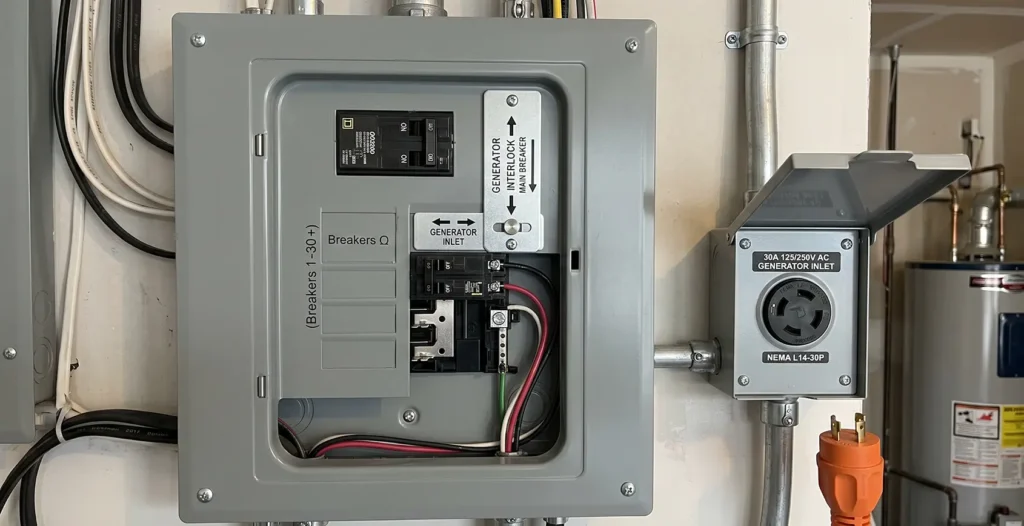
A generator inlet is an exterior connection point that allows a portable generator to connect to a home’s electrical system. Rather than running multiple extension cords through doors or windows, the portable generator connects to the home’s electrical panel through the inlet using an appropriately rated generator cord. This creates a more organized and permanent connection for portable generator power.
The generator inlet is essentially the connection point between the generator outside your home and the electrical system inside your home. However, the inlet itself does not determine which source of electricity is powering the home. That is where the interlock kit comes in.
What Does a Generator Interlock Kit Do?
A generator interlock kit is a mechanical safety device installed at the home’s electrical panel. Its primary purpose is to prevent the utility/main breaker and generator breaker from being turned on at the same time. The generator inlet is where the portable generator connects to the home. The interlock controls how generator power is transferred into the home’s electrical system.
Together, these components provide a controlled way to use a portable generator to supply power to selected circuits during an outage.
Because the inlet, generator breaker, interlock, and associated wiring all need to work together properly, this is not a system that should be improvised with household outlets, homemade cords, or mismatched equipment.
How Do a Generator Inlet and Interlock Work Together?
The basic setup looks like this:
Portable Generator → Generator Cord → Exterior Inlet → Electrical Panel → Interlock → Selected Home Circuits
When utility power is lost, the homeowner can start the portable generator and connect it to the exterior generator inlet using the appropriate generator cord. The interlock then allows the homeowner to switch the electrical panel from utility power to generator power without allowing both power sources to be connected simultaneously.
When utility power returns, the system can be switched back according to the equipment’s instructions.
This setup gives homeowners access to selected circuits without requiring extension cords to be run throughout the house.
Why You Should Never Backfeed a Home Through an Outlet
One of the most important generator safety rules is simple: never connect a portable generator to a household outlet using a homemade or improper cord.
This practice, known as backfeeding, can send electricity backward through the home’s electrical system and onto utility power lines. This creates a serious electrocution hazard for utility workers and others who may be working on the electrical system.
A properly installed transfer mechanism is designed to prevent generator power and utility power from being connected simultaneously.
If you are considering connecting a portable generator directly to your home’s electrical system, a qualified electrician can determine the appropriate equipment and installation method for your electrical panel and generator.
What Can a Portable Generator Power?
A portable generator cannot necessarily power every appliance or system in your home. The circuits it can operate depend on the generator’s capacity, the home’s electrical configuration, and the electrical loads connected to those circuits.
Common priority loads may include:
- Refrigerators and freezers
- Interior and exterior lighting
- Wi-Fi equipment
- Security systems
- Garage door openers
- Selected appliances
- Selected pumps
Larger equipment can require significantly more power. Air conditioners and other motor-driven appliances may require substantial starting power before settling into their normal running wattage.
Before an outage occurs, homeowners should understand their generator’s running wattage and starting wattage and avoid exceeding the generator’s capacity.
If keeping your HVAC system operating during an outage is a priority, it is especially important to determine whether your portable generator has enough capacity to handle the equipment.
Why Professional Generator Inlet Installation Matters
A generator inlet, generator breaker, interlock, and associated wiring must be properly matched to the home’s electrical panel. Installation also needs to follow applicable electrical codes, equipment listings, and manufacturer requirements.
Improper installation can create shock, fire, and backfeeding hazards.
A qualified electrician can evaluate the home’s electrical panel, determine whether the panel and generator are compatible, select the appropriate equipment, and install the system correctly.
Professional installation also gives homeowners the opportunity to understand which circuits are intended to be powered during an outage and how to operate the system properly.
Portable Generator vs. Whole-Home Standby Generator
A portable generator with an inlet and interlock is generally a more manual backup-power solution.
The homeowner is responsible for starting, operating, and refueling the portable generator and selecting which circuits to power based on the generator’s capacity.
There are no permits needed, a portable generator is ready to use without heavy construction or property changes. It has a much lower cost than permanent standby units and runs on fuel options like gasoline, propane, or dual fuel.
A whole-home standby generator is a more permanent backup-power solution. It is installed at the home and typically uses an automatic transfer switch to detect an outage and automatically provide backup power.
Standby generators can be sized to power essential circuits or much larger portions of the home, depending on the system and installation.
For homeowners deciding between the two options, the right choice depends on their home’s electrical needs, desired level of convenience, generator capacity, and backup-power goals.
Preparing Your Portable Generator for Hurricane Season
For Southwest Florida homeowners, preparing a backup-power system before hurricane season is much better than trying to figure everything out when a storm is approaching.
If you are considering a portable generator inlet and interlock kit, have the system professionally installed ahead of time. Homeowners should also regularly test and maintain their generator, understand which circuits they need during an outage, and know whether the generator can handle larger loads such as HVAC equipment.
Generator safety is just as important as electrical preparation. Portable generators must always be operated outdoors and at least 20 feet from the home, with exhaust directed away from windows, doors, and vents. Never operate a generator inside a garage, even if the garage door is open.
Make sure carbon monoxide alarms are working properly, and plan ahead for Florida’s weather conditions, including rain and flooding. Homeowners should also consider safe fuel storage when preparing for a potentially extended outage.
Is a Portable Generator Inlet Right for Your Home?
A portable generator inlet and interlock kit can provide homeowners with a more controlled way to connect a portable generator to selected circuits during a power outage. However, the system needs to be properly matched to the home’s electrical panel and generator.
Whether you are preparing for hurricane season or simply want a reliable backup-power plan, understanding your options before an outage occurs can help you make safer and more informed decisions.
If you’re considering a portable generator hookup, generator inlet, or interlock kit for your Southwest Florida home, have your electrical system evaluated by a qualified professional to determine the appropriate setup for your home’s needs.