
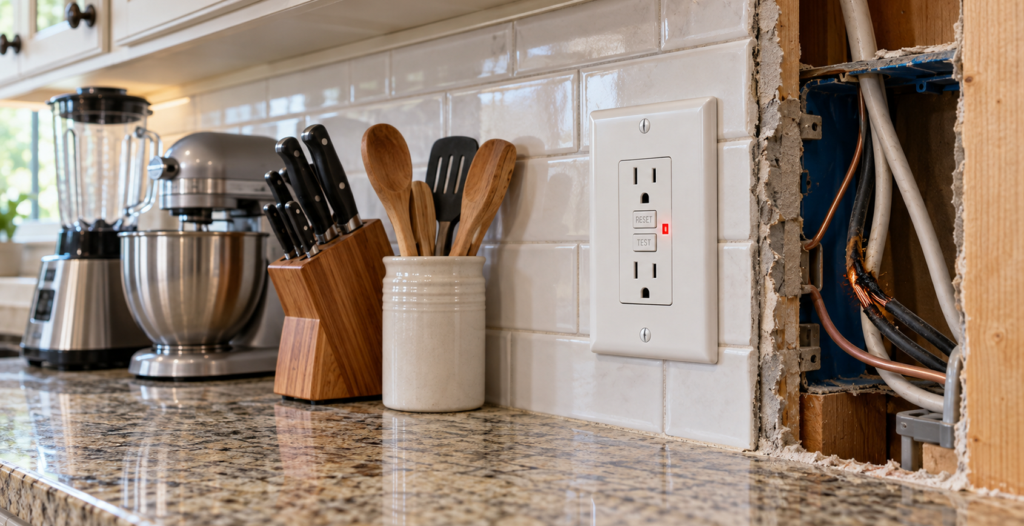


Have you ever plugged in a hair dryer, appliance, or power tool only to have the outlet suddenly shut off? If the outlet has TEST and RESET buttons, you are probably dealing with a GFCI outlet.
A GFCI outlet is designed to protect you from electrical shock by shutting off power when it detects an unsafe change in electrical current. So, if your GFCI keeps tripping, it is usually doing exactly what it was designed to do.
The important question is: Why is it tripping?
Sometimes, the cause is something simple, such as moisture or an overloaded circuit. In other cases, repeated trips can point to a faulty appliance, damaged wiring, or a problem with the outlet itself.
Here’s what you need to know.
What Is a GFCI Outlet?
GFCI stands for Ground-Fault Circuit Interrupter. It is a type of electrical outlet designed to protect people from electrical shock.
A regular outlet supplies electricity to whatever you plug into it. A GFCI outlet does that too, but it also constantly monitors the flow of electricity.
If it detects that some of the current is taking an unintended path—such as through a person toward the ground—it can shut off power very quickly.
You will commonly find GFCI outlets in areas where electricity and water may come into contact, including:
- Bathrooms
- Kitchens
- Garages
- Laundry areas
- Outdoor outlets
- Basements and other potentially damp areas
You can usually identify one by the TEST and RESET buttons on the front.
Why Does a GFCI Keep Tripping?
A GFCI may trip for several reasons. The most common include moisture, a faulty appliance, an overloaded circuit, damaged wiring, or a defective GFCI outlet.
The challenge is figuring out which one is causing the problem.
1. Moisture May Be Getting Into the Outlet
Water and electricity don’t mix. Even a small amount of moisture can cause a GFCI to trip.
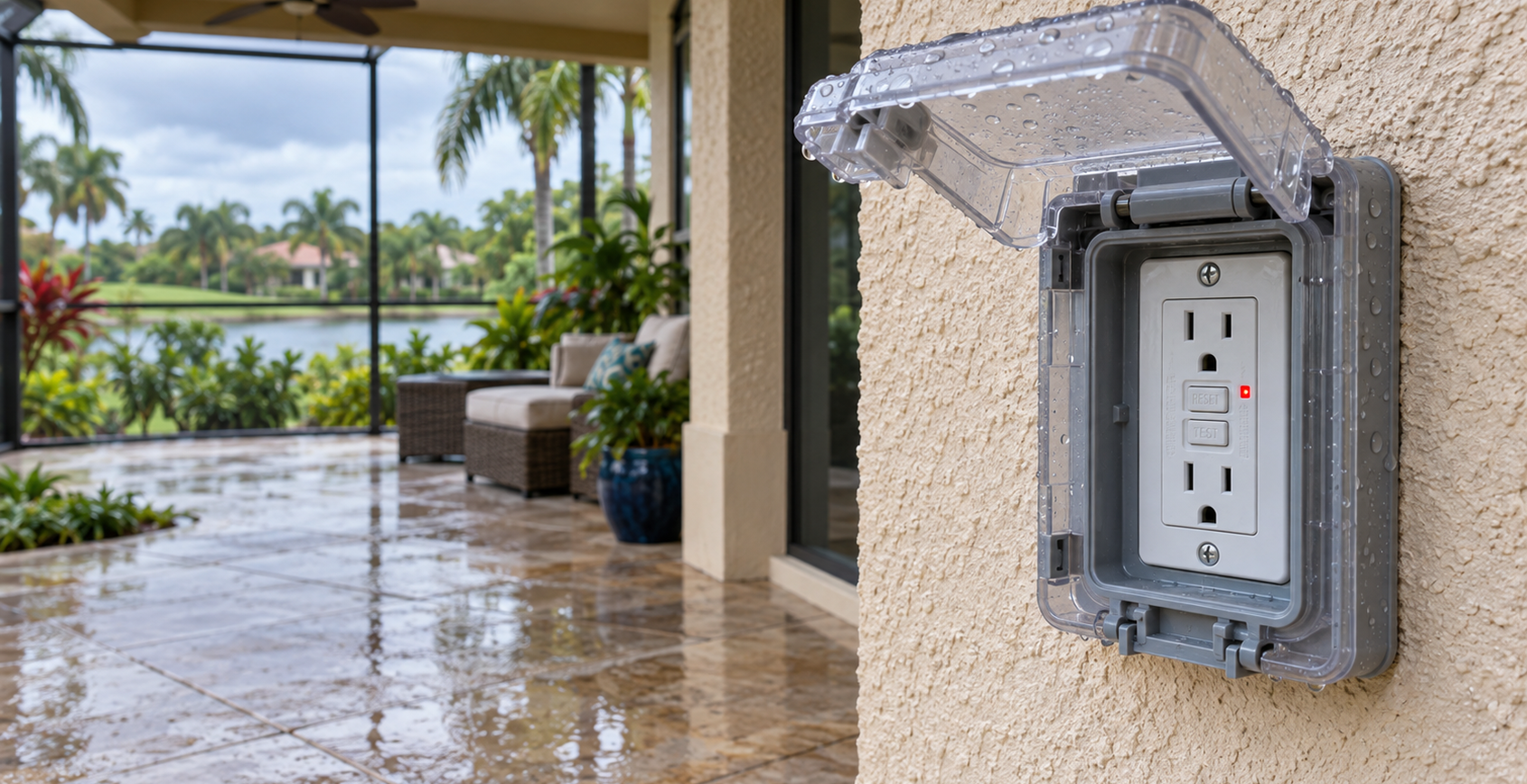
For example, a bathroom outlet may trip after someone uses a hair dryer near the sink. An outdoor GFCI may trip after heavy rain.
You may also have moisture inside an outlet box, extension cord, or connected appliance.
If the GFCI trips after rain or when you’re using an appliance near water, moisture could be the first thing to investigate.
What to do: Unplug appliances and make sure the area is dry. Don’t use an outlet that appears wet or damaged.
2. A Faulty Appliance Could Be the Problem
Sometimes the GFCI isn’t the problem at all. The appliance connected to it may have an electrical fault.
A damaged hair dryer, old coffee maker, refrigerator, power tool, or other appliance can cause a ground fault that makes the GFCI shut off power.
Here’s a simple example:
You plug your coffee maker into the kitchen GFCI and it immediately trips. You reset the outlet, but it trips again as soon as you turn the coffee maker on.
The coffee maker could be the source of the problem.
If the GFCI works normally when the appliance is unplugged, stop using that appliance until it can be checked or replaced.
3. The Circuit May Be Overloaded
A GFCI can also trip when too many electrical devices are drawing power from the same circuit.
For example, imagine you’re using a toaster, microwave, coffee maker, and another small appliance on the same kitchen circuit. Depending on the circuit and the appliances, the combined electrical load may become too much.
However, overloading and a ground fault are not the same thing, and a GFCI is primarily designed to detect ground faults.
If you frequently have multiple devices losing power at the same time, an electrician can determine whether the circuit is overloaded or whether there is another electrical problem.
4. There Could Be Damaged Wiring
If your GFCI keeps tripping even when nothing is plugged into it, the problem may be more serious.
Damaged, loose, or deteriorating wiring can create an electrical fault. Wiring problems may occur inside the outlet, in the electrical box, or farther along the circuit.
You shouldn’t try to open the outlet and troubleshoot wiring yourself unless you’re qualified to do electrical work.
Repeated trips are a warning that the electrical system needs attention—not something you should simply bypass.
5. The GFCI Outlet Itself May Be Faulty
GFCI outlets don’t last forever.
If an outlet is old, damaged, or malfunctioning, it may trip unnecessarily or refuse to reset.
You may notice signs such as:
- The RESET button won’t stay in
- The outlet trips repeatedly
- The TEST button doesn’t work properly
- The outlet feels warm
- You see discoloration or burn marks
- The outlet makes buzzing or crackling sounds
A faulty GFCI may need to be replaced by a qualified electrician.
What Should You Do When a GFCI Trips?
If your GFCI trips, don’t immediately assume the outlet needs to be replaced.
Start by unplugging the devices connected to it. Then check whether there is any obvious moisture, damage, or other visible problem.
If the area is dry and there are no visible signs of damage, you can press the RESET button.
If the outlet resets and works normally, reconnect your appliances one at a time.
If the GFCI trips again when you connect one particular appliance, that appliance may be the source of the problem.
What if the GFCI won’t reset?
A GFCI that won’t reset can have several possible causes.
There may still be a ground fault, moisture may be present, or the outlet itself could be defective. In some installations, one GFCI can also protect other outlets farther along the same circuit.
If you can’t identify an obvious cause, avoid repeatedly forcing the outlet to reset. Have an electrician inspect it instead.
Why Does My GFCI Keep Tripping With Nothing Plugged In?
This is one of the more concerning situations.
If nothing is plugged into the outlet but the GFCI continues to trip, the issue could be somewhere in the circuit rather than with an appliance.
Possible causes include:
- Moisture in the outlet or electrical box
- Damaged wiring
- A problem with another outlet protected by the same GFCI
- A ground fault elsewhere on the circuit
- A faulty GFCI outlet
For example, resetting the GFCI may restore power to several outlets in a bathroom, garage, or outdoor area. A problem at one of those connected outlets could cause the GFCI to trip even though nothing is plugged directly into the GFCI outlet.
Because electrical faults can create a shock or fire hazard, repeated unexplained trips are a good reason to have the circuit professionally inspected.
Is It Safe to Keep Resetting a GFCI?
If a GFCI trips once because of something obvious, such as accidentally getting an outlet wet, resetting it after the area is safely dry may solve the problem.
But if it keeps tripping, don’t treat the RESET button as a permanent solution.
The GFCI is telling you that it has detected a condition it considers unsafe. Repeatedly resetting it without finding the cause could leave an underlying electrical problem unresolved.
Never remove, bypass, or replace a GFCI with a standard outlet simply to stop it from tripping.
When Should You Call an Electrician?
Call a qualified electrician if:
- The GFCI keeps tripping after you unplug appliances.
- It trips even when nothing is plugged in.
- The RESET button won’t stay engaged.
- You notice burning, discoloration, buzzing, or crackling.
- An outlet feels hot.
- You see damaged wiring or an outlet that appears loose.
- The problem keeps coming back without an obvious explanation.
These signs can indicate an electrical problem that requires more than a simple reset.
Keep Your GFCI Doing Its Job
A GFCI outlet may be inconvenient when it shuts off power unexpectedly, but that interruption is often the safety feature working as intended.
If your GFCI keeps tripping, look for simple causes such as moisture or a faulty appliance first. If the problem continues—or happens when nothing is plugged in—don’t ignore it.
A professional electrician can test the outlet and circuit, identify the source of the fault, and recommend the appropriate repair.
At Veteran Air, we know electrical problems can be frustrating, especially when they interrupt something as simple as using an appliance or turning on a light. If your GFCI keeps tripping and you can’t determine why, getting the issue professionally checked can help keep your home safe and your electrical system working reliably.