


Your air conditioner depends on several electrical and mechanical components working together to keep your home comfortable. While homeowners are often familiar with the compressor, condenser, thermostat, and air filter, an AC capacitor is another important component that can have a major effect on how the system starts and operates.
When an AC capacitor begins to fail, your air conditioner may struggle to start, make unusual noises, blow warm air, or stop working altogether. In Florida, where air conditioners often operate for long periods during hot and humid weather, recognizing these warning signs can help homeowners address problems before a minor component failure affects the rest of the system.
Understanding what an AC capacitor does, why it fails, and when professional service is needed can help you make informed decisions about AC repairs and maintenance.
What Is an AC Capacitor?
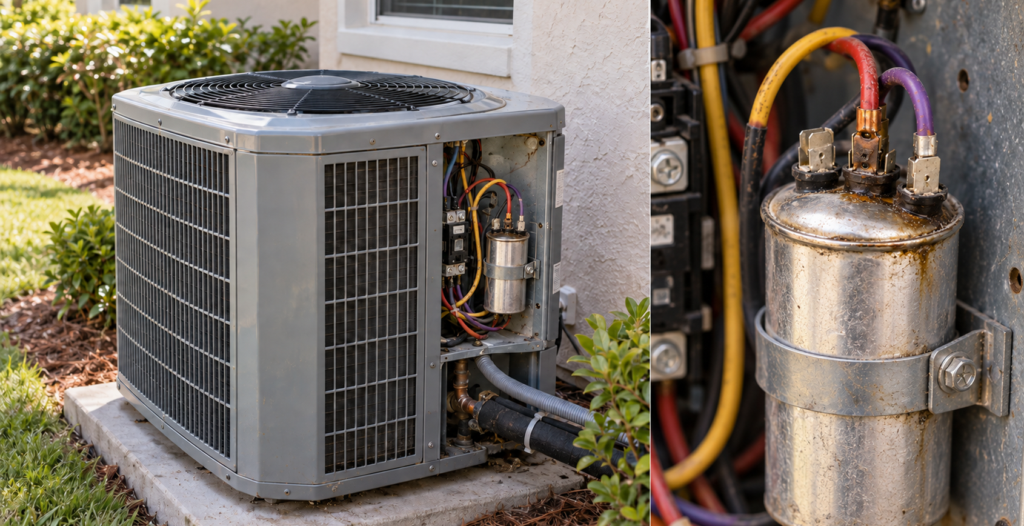
An AC capacitor is an electrical component that stores and releases electrical energy to help certain motors in your air conditioning system start and continue operating.
Residential air conditioners commonly use capacitors to support motors such as the compressor motor and condenser fan motor. Some systems use separate capacitors for different components, while others use a dual capacitor that supports more than one motor.
A capacitor does not continuously supply power like a battery. Instead, it provides the electrical boost and support needed for motor operation.
When the capacitor is functioning correctly, the associated motor can start and run as designed. When its electrical capacity decreases or the component fails, the motor may struggle to start or may not operate at all.
What Does an Air Conditioner Capacitor Do?
An air conditioner capacitor helps provide the electrical energy required by certain AC motors during startup and operation.
The compressor is particularly important because it circulates refrigerant through the air conditioning system. The condenser fan motor also needs electrical support to operate and move air across the outdoor condenser coil.
If the capacitor supporting one of these motors is weak or defective, the affected component may not operate properly.
For example, a homeowner may notice that the indoor blower is running but the outdoor unit is not operating correctly. In another situation, the outdoor unit may make a humming sound without starting. These symptoms can have several possible causes, including capacitor problems, which is why professional diagnosis is important.
What Causes AC Capacitor Failure?
Several factors can contribute to AC capacitor failure.
Age and Normal Wear
Capacitors gradually lose their ability to store electrical energy as they age. An older capacitor may become less effective before it eventually fails.
High Outdoor Temperatures
Florida’s hot weather can place additional stress on outdoor AC components. The condenser unit operates outside, where temperatures can become significantly higher than indoor conditions.
Extended AC Operation
Florida air conditioners may run for long periods during the cooling season. Longer operating cycles can contribute to normal wear on electrical and mechanical components.
Electrical Problems
Voltage fluctuations, electrical irregularities, and other system issues can affect capacitor performance. A technician may need to evaluate the broader electrical system when a capacitor repeatedly fails.
Physical Deterioration
A damaged capacitor may show visible signs such as swelling, leaking, or deformation. However, visual inspection alone cannot determine whether a capacitor is operating within its required electrical specifications.
What Are the Signs of a Bad AC Capacitor?
A bad AC capacitor can produce several different symptoms. However, these symptoms can also occur because of other AC problems, so homeowners should not assume that every starting or cooling issue means the capacitor has failed.
Common warning signs include:
The Outdoor Unit Hums but Does Not Start
A humming sound from the outdoor unit without normal fan or compressor operation can indicate a motor-starting problem. A failed capacitor is one possible cause.
The AC Takes Longer to Start
A weakening capacitor may cause a motor to struggle during startup. You may hear unusual sounds or notice a delay before the outdoor unit begins operating.
The Air Conditioner Blows Warm Air
If the outdoor system is not operating correctly, the AC may not be able to remove heat from your home effectively. This can result in warm or insufficiently cool air indoors.
The Outdoor Fan Is Not Running
A capacitor problem can affect the condenser fan motor. If the outdoor fan isn’t operating while the system is calling for cooling, professional diagnosis is recommended.
The System Shuts Down Unexpectedly
A motor that cannot operate properly may cause the system to shut down or trigger protective controls.
Higher Energy Consumption
A struggling motor may operate inefficiently. However, increased energy use can have many causes, including dirty coils, airflow restrictions, refrigerant problems, aging equipment, or thermostat issues.
What Happens If an AC Capacitor Fails?
The consequences of a failed capacitor depend on which motor it supports and the design of the AC system.
If a condenser fan capacitor fails, the fan may stop operating. Without proper airflow across the outdoor condenser coil, the system can experience increased operating temperatures and may eventually shut down.
If the capacitor supporting the compressor fails, the compressor may have difficulty starting. Repeated attempts to start a compressor without proper electrical support can place additional stress on the equipment.
This is one reason homeowners should avoid repeatedly turning an air conditioner on and off when the outdoor unit is making unusual sounds or failing to start.
A capacitor problem may be relatively straightforward to correct, but continuing to operate an AC system with an unresolved electrical or motor issue can potentially lead to more extensive problems.
Can You Repair an AC Capacitor?
In most cases, an individual failed capacitor is replaced rather than repaired.
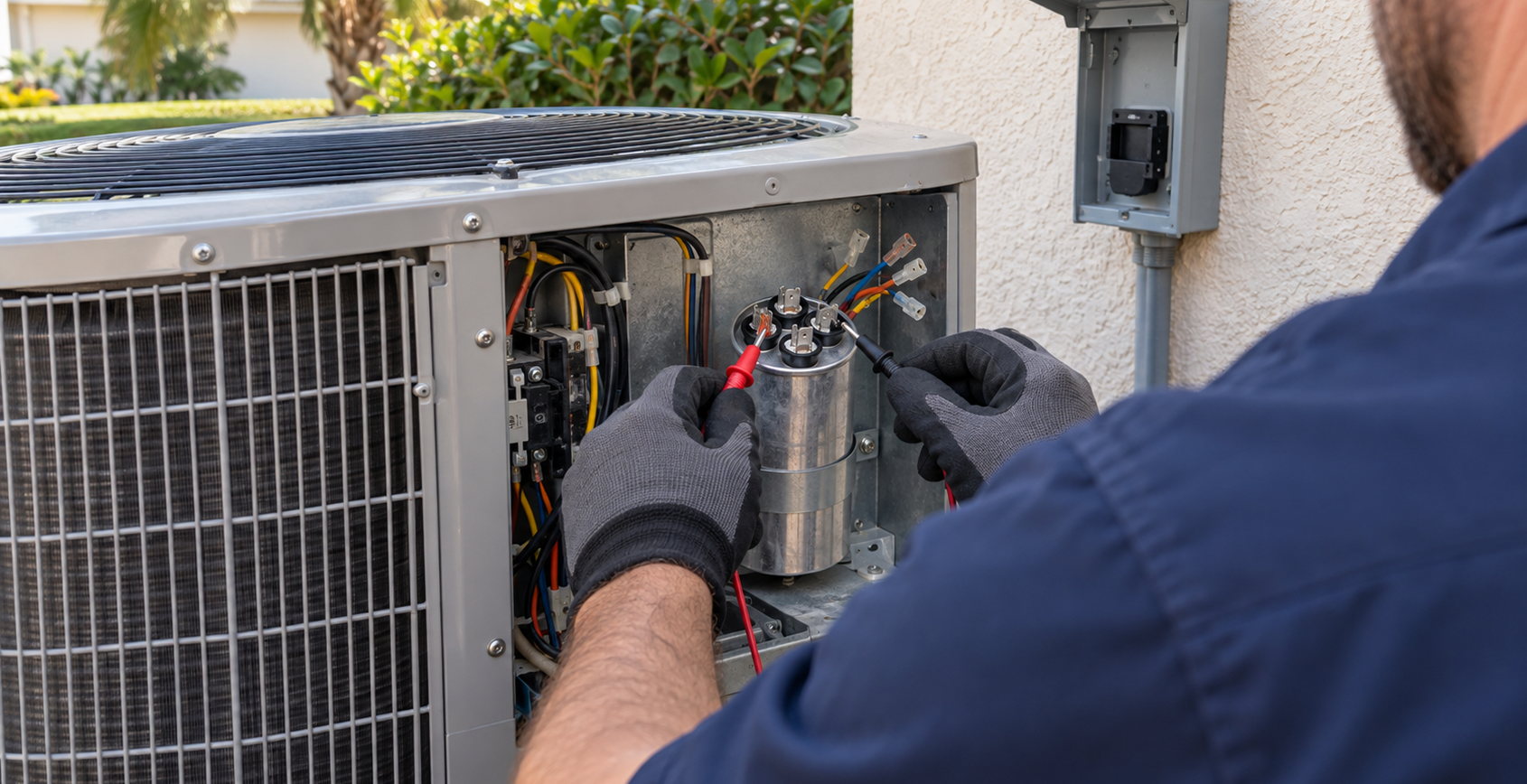
Capacitors are manufactured with specific electrical ratings, and the replacement component must be compatible with the AC equipment. A technician can test the capacitor and determine whether its measured electrical performance falls outside the manufacturer’s required range.
Professional AC capacitor repair in Florida generally involves diagnosing the capacitor or related electrical issue and replacing the defective component when necessary.
It is also important to determine why a capacitor failed, particularly if the same problem occurs repeatedly. Simply replacing the component without evaluating the rest of the system may not address an underlying electrical or equipment issue.
When Is AC Capacitor Replacement Necessary?
AC capacitor replacement may be recommended when testing confirms that the capacitor has failed or is no longer operating within its required specifications.
The replacement capacitor must have appropriate electrical characteristics for the equipment. Using an incorrect component can create operational and safety concerns.
During service, a qualified technician can inspect the capacitor, associated wiring, motor connections, and other relevant components before completing the replacement.
For homeowners, this means the goal should not simply be replacing a part as quickly as possible. Proper diagnosis helps determine whether the capacitor is actually responsible for the problem and whether another issue is contributing to the failure.
AC Capacitor vs. Other AC Problems
One reason professional diagnosis matters is that several AC problems can produce similar symptoms.
For example, an air conditioner that isn’t cooling could have an issue involving:
- The capacitor
- Compressor
- Condenser fan motor
- Thermostat
- Electrical connections
- Refrigerant system
- Airflow
- Condenser coil
- Control components
A homeowner may hear a humming sound and assume the capacitor is bad, but the actual cause could be different.
Similarly, an AC system that repeatedly trips a breaker may have an electrical problem, motor issue, compressor problem, or another underlying fault. Continuing to reset the breaker without identifying the cause is not a substitute for professional diagnosis.
Why Florida Homeowners Should Pay Attention to AC Capacitor Problems
Florida’s cooling season can place substantial operating demands on residential air conditioning systems. Homeowners often depend on their AC systems for consistent indoor comfort during periods of high outdoor temperatures and humidity.
A small electrical component such as an AC capacitor can therefore have an immediate effect on system operation.
Recognizing unusual sounds, startup problems, inconsistent cooling, or outdoor unit issues gives homeowners an opportunity to schedule professional service before the system experiences a more disruptive failure.
This is particularly important before periods of extreme heat or when preparing an older AC system for another cooling season.
How to Prevent AC Capacitor Problems
There is no way to guarantee that an AC capacitor will never fail, but routine system maintenance can help identify developing problems.
Professional AC maintenance may include inspection of electrical components, testing of system operation, cleaning of coils, evaluation of airflow, and inspection of other components according to the equipment and maintenance requirements.
Homeowners can also help protect their AC system by:
- Replacing or cleaning filters as recommended
- Keeping the outdoor unit clear of significant debris
- Scheduling routine professional maintenance
- Paying attention to unusual noises
- Addressing cooling problems promptly
- Avoiding repeated attempts to restart a malfunctioning system
These steps do not eliminate normal component wear, but they can help homeowners identify system problems earlier.
When to Call for AC Repair in Florida
If your air conditioner isn’t starting properly, the outdoor unit is humming without operating, the system is blowing warm air, or you notice other unusual behavior, professional diagnosis is recommended.
For homeowners looking for AC repair in Florida, a qualified technician can evaluate the system and determine whether a bad AC capacitor is responsible or whether another component is causing the problem.
Electrical components can present safety hazards, and capacitors can retain an electrical charge even after the air conditioner has been turned off. Homeowners should not attempt to handle, discharge, test, or replace an AC capacitor themselves.
Professional AC Capacitor Service from Veteran Air
An AC capacitor may be a relatively small component, but it plays an important role in helping air conditioning motors start and operate properly. When a capacitor becomes weak or fails, the symptoms can range from unusual sounds and difficult startups to poor cooling or a completely non-operational outdoor unit.
The important thing is to identify the actual cause rather than assuming that every AC problem is a capacitor issue. Professional testing can determine whether the capacitor needs replacement and whether other components require attention.
Veteran Air provides professional AC services for Florida homeowners, including diagnostics, repairs, maintenance, and AC capacitor replacement when appropriate. If you’re experiencing symptoms of a bad AC capacitor or another air conditioning problem, our technicians can evaluate your system and recommend the appropriate solution for your home.