


When a storm causes a power outage, a portable generator can provide temporary electricity for essential appliances and systems. However, connecting a portable generator to your home requires more than simply purchasing a generator and plugging in extension cords. A properly designed connection helps homeowners use backup power more conveniently while reducing the risk of dangerous electrical back feeding.
A portable generator interlock kit and a properly installed generator inlet can provide a practical way to connect a compatible portable generator to a home’s electrical panel. For Florida homeowners, understanding how these components work, when they are appropriate, and why professional installation matters can make preparing for hurricane season much easier.
Veteran Air provides professional electrical and generator services to help Florida homeowners evaluate their backup power needs and determine an appropriate solution for their property.
What Is a Portable Generator Inlet?
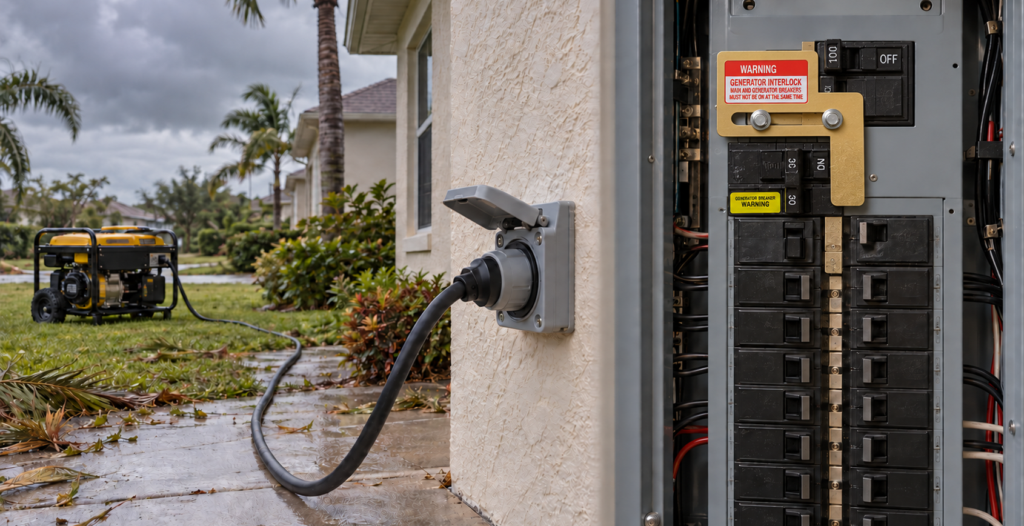
A portable generator inlet is an exterior electrical connection point that allows a portable generator to connect to a home’s electrical system through a properly configured circuit. Instead of running multiple extension cords through doors or windows, a homeowner can connect the generator to the exterior inlet using an appropriate generator cord.
The inlet is typically installed on an exterior wall near the electrical panel or another suitable location. Wiring runs from the inlet to a dedicated breaker or other approved connection point within the electrical system.
A portable generator inlet box provides the exterior connection where the generator cord plugs into the home. The exact inlet type depends on the generator’s output, voltage, amperage, plug configuration, and the electrical requirements of the circuits being powered.
Because these factors vary between homes, a generator inlet should be selected and installed based on the actual electrical system rather than simply choosing a component based on appearance or price.
What Is a Generator Interlock Kit?
A generator interlock kit is a mechanical device designed for use with certain electrical panels. It prevents the utility power connection and the generator connection from being energized at the same time.
In simple terms, the interlock creates a physical sequence:
Utility power ON → Generator OFF
or
Generator ON → Utility power OFF
This prevents the homeowner from unintentionally powering the electrical panel from both sources simultaneously.
An interlock is different from an automatic transfer switch. An interlock is generally operated manually, while an automatic transfer switch can detect a utility outage and transfer the electrical load to a compatible standby generator automatically.
Whether an interlock arrangement is appropriate depends on the home’s electrical panel, generator, intended loads, and applicable requirements.
How Does a Portable Generator Inlet and Interlock Work Together?
The generator inlet box and interlock serve different purposes but work together as part of a portable generator connection.
The inlet provides the physical connection between the portable generator and the home’s electrical system. The interlock controls which power source is allowed to energize the panel.
During a power outage, the homeowner would typically:
- Turn off or isolate the utility supply according to the installed system’s instructions.
- Move the interlock into the generator position.
- Connect the portable generator to the exterior inlet using the correct generator cord.
- Start the generator according to the manufacturer’s instructions.
- Energize the appropriate circuits or loads.
When utility power is restored, the process is reversed according to the system’s operating instructions.
The exact procedure depends on the equipment installed, so homeowners should always follow the manufacturer’s instructions and the instructions provided by the installing electrician.
Why Is an Interlock Important?
One of the most important reasons for installing a generator interlock kit is to prevent electrical backfeeding.
Backfeeding can occur when electricity from a portable generator is introduced into a home’s electrical system in an unsafe manner. If the generator energizes wiring that is still connected to the utility supply, electricity can potentially travel back toward the utility grid.
This creates a serious hazard for utility workers and others who may be working on electrical lines.
A properly designed interlock system helps prevent this situation by mechanically controlling the relationship between the utility supply and generator supply. However, an interlock is only one component of a safe generator installation. The generator, inlet, wiring, breakers, panel, grounding and bonding arrangements, and other components must all be appropriate for the installation.
Is a Portable Generator Inlet Better Than Extension Cords?
For some homeowners, a professionally installed portable generator inlet can provide a more practical backup power arrangement than relying on multiple extension cords.
Extension cords may be suitable for certain individual appliances when used according to the generator and cord manufacturer’s instructions. However, running multiple cords through doors or windows can create challenges during a storm and may limit which household systems can be powered.
A properly installed inlet can provide a dedicated connection between the generator and home’s electrical system. Depending on the configuration, homeowners may then be able to power selected circuits through the electrical panel.
This does not mean that every circuit in the home should automatically be powered by a portable generator. The generator’s capacity must be considered carefully. High-demand equipment such as central air conditioning, electric water heaters, ranges, pool equipment, and other large loads can require substantial generator capacity.
What Is Involved in Generator Inlet Installation?
Generator inlet installation should begin with an evaluation of the home’s electrical system.
An electrician may need to assess:
- Electrical panel type and condition
- Available breaker spaces
- Generator output and specifications
- Required voltage and amperage
- Circuits the homeowner wants to operate
- Distance between the panel and inlet
- Existing wiring
- Grounding and bonding configuration
- Physical location of the inlet
- Applicable permitting and inspection requirements
The electrician can then determine whether an interlock arrangement is suitable and what type of inlet and wiring are appropriate.
Installation details can vary considerably from one property to another. A newer electrical panel may have different requirements from an older panel, while a long wiring run may require different materials and installation considerations than an inlet located close to the panel.
Does Every Portable Generator Need an Interlock Kit?
No. A portable generator interlock kit is not automatically the right solution for every home.
Some homeowners may prefer to connect only individual appliances using approved cords. Others may benefit from a properly installed inlet and interlock arrangement. Homes with certain electrical panels may require a different transfer equipment configuration.
The right solution depends on the generator, electrical panel, desired loads, and applicable electrical requirements.
A professional evaluation is particularly important if the electrical panel is older, has limited capacity, has signs of overheating or damage, or has been modified previously.
Portable Generator Installation in Florida
Portable generator installation Florida homeowners consider should account for both electrical safety and generator operating conditions.
Florida’s hurricane season can bring heavy rain, strong winds, flooding, and prolonged power outages. Portable generators must therefore be positioned and operated carefully.
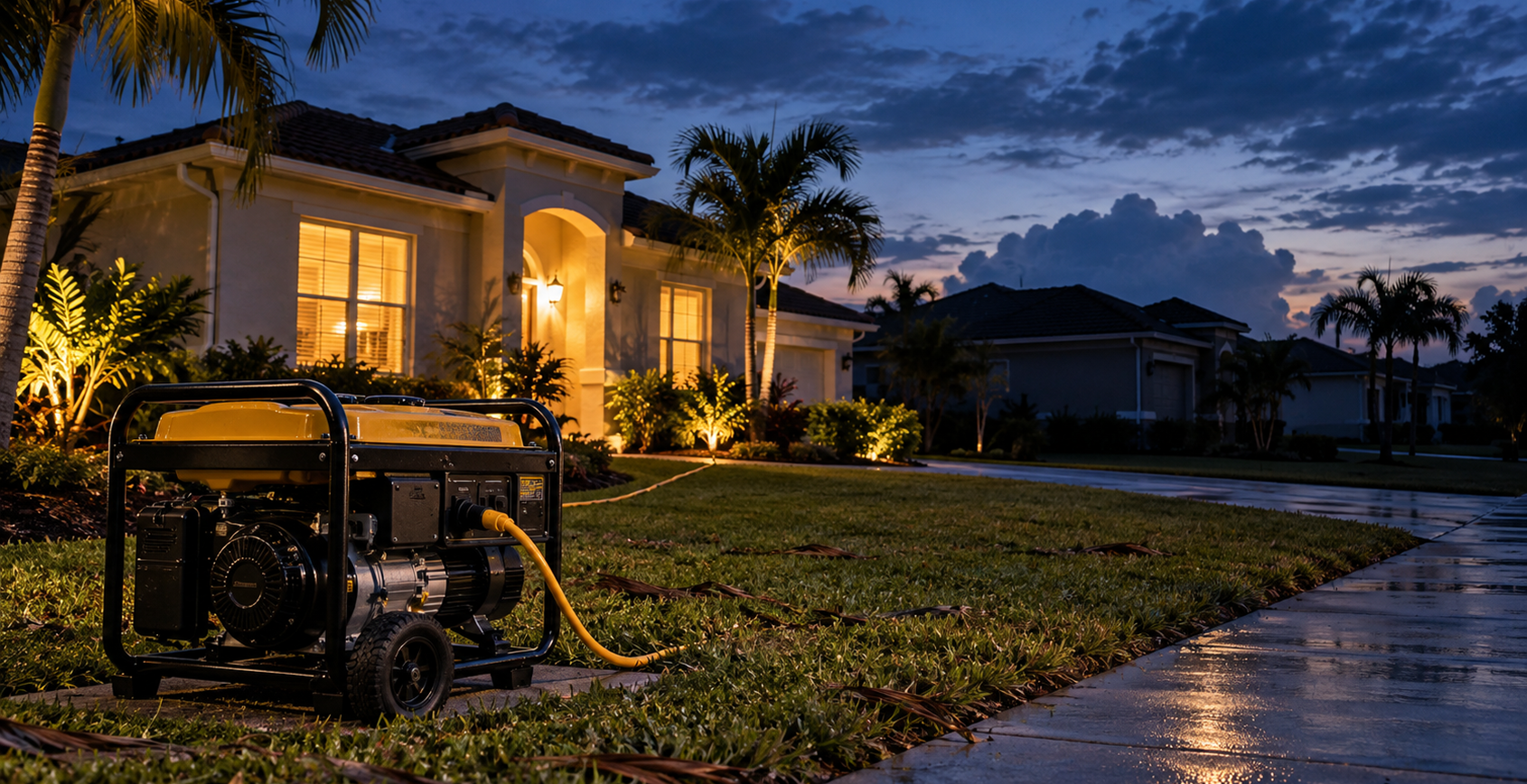
The U.S. Consumer Product Safety Commission recommends operating portable generators outdoors at least 20 feet from the home and directing exhaust away from windows, doors, and vents. Generators should never be operated inside a home, garage, basement, shed, or other enclosed space because of the risk of carbon monoxide poisoning.
Homeowners should also follow the generator manufacturer’s instructions regarding operation during wet weather and electrical connections.
How Do You Choose the Right Generator Inlet Box?
Choosing a generator inlet box involves more than selecting a box that fits on an exterior wall.
The inlet must be compatible with the generator and electrical installation. Important considerations can include:
- Generator voltage
- Generator amperage
- Connector configuration
- Circuit breaker requirements
- Wire size
- Panel compatibility
- Outdoor location
- Weather exposure
- Applicable electrical requirements
For example, a homeowner with a higher-capacity portable generator may require a different inlet configuration than someone using a smaller generator for a limited number of essential circuits.
The generator inlet should therefore be selected as part of the overall electrical design rather than treated as an independent accessory.
Why Professional Installation Matters
A generator connection affects the home’s electrical system and should be approached as an electrical installation rather than a simple DIY upgrade.
Improper wiring, an incorrectly sized breaker, an incompatible interlock, inadequate connections, or an incorrectly configured grounding and bonding system can create serious safety concerns.
A qualified professional can evaluate the existing electrical system, determine whether the proposed setup is appropriate, install the required equipment, and help verify that the system operates as intended.
Professional service can also help homeowners understand which circuits can safely be powered by their portable generator and how to operate the system during an outage.
Preparing Your Generator System Before a Florida Storm
The best time to address generator connections is before a storm arrives.
Florida homeowners can prepare by:
- Having the generator inspected before hurricane season
- Testing the generator according to the manufacturer’s instructions
- Checking fuel availability and storage practices
- Inspecting generator cords for damage
- Testing smoke and carbon monoxide alarms
- Reviewing the inlet and interlock operating procedure
- Identifying essential household circuits
- Scheduling electrical inspections when necessary
- Keeping the generator manual readily available
Waiting until a hurricane is approaching can make it harder to obtain equipment, schedule electrical work, or address problems discovered during testing.
Get Professional Generator Inlet Installation in Florida
A portable generator can be an important part of a Florida home’s emergency preparedness plan, but the connection between the generator and electrical system deserves careful attention. A properly selected portable generator inlet, compatible generator inlet box, and correctly installed generator interlock kit can provide a structured way to connect a portable generator to selected household circuits.
Veteran Air provides professional electrical and generator services to help homeowners evaluate their backup power options. Our technicians can assess your electrical system, discuss your generator requirements, and recommend an appropriate solution based on your home’s configuration and power needs.
If you’re considering portable generator installation in Florida, contact Veteran Air to discuss your home’s backup power requirements and determine whether a generator inlet and interlock system is right for your property.