
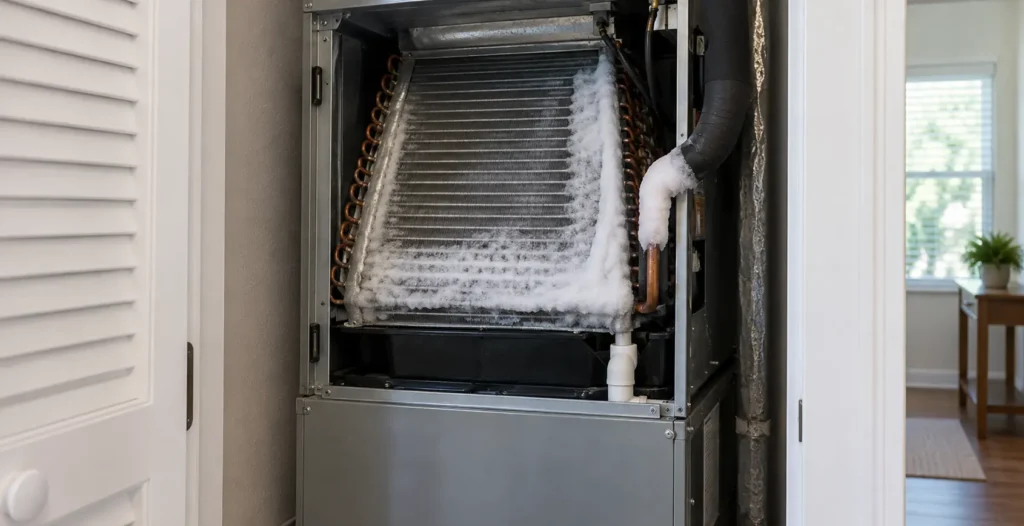


Seeing ice on your air conditioner can be surprising, especially when you’re trying to cool your home. You may notice frost around the refrigerant lines, ice forming on the indoor coil, or a thick layer of ice covering part of the outdoor unit. It may seem like the AC is simply working too hard, but ice buildup usually indicates that something is preventing the system from operating normally.
An air conditioner is designed to remove heat from indoor air while maintaining the right airflow and refrigerant conditions. When airflow becomes restricted, refrigerant levels are incorrect, or another component isn’t working properly, the evaporator coil can become too cold. Moisture from the air then freezes on the coil, creating the ice you see.
If your AC keeps freezing up, understanding the possible causes can help you determine what to check and when professional service is needed.
What Causes an Air Conditioner to Freeze Up?
Several problems can cause ice to form on an AC system. The most common include:
- Restricted airflow
- A dirty air filter
- Dirty evaporator coils
- Low refrigerant
- Problems with the blower fan
- Blocked or closed vents
- Thermostat issues
- Outdoor temperature that’s too low
- Mechanical or electrical problems
The important thing to remember is that ice is usually a symptom rather than the root problem. Simply removing the ice may not solve the underlying issue.
1. A Dirty or Clogged Air Filter
One of the simplest causes of a frozen AC is a dirty air filter.
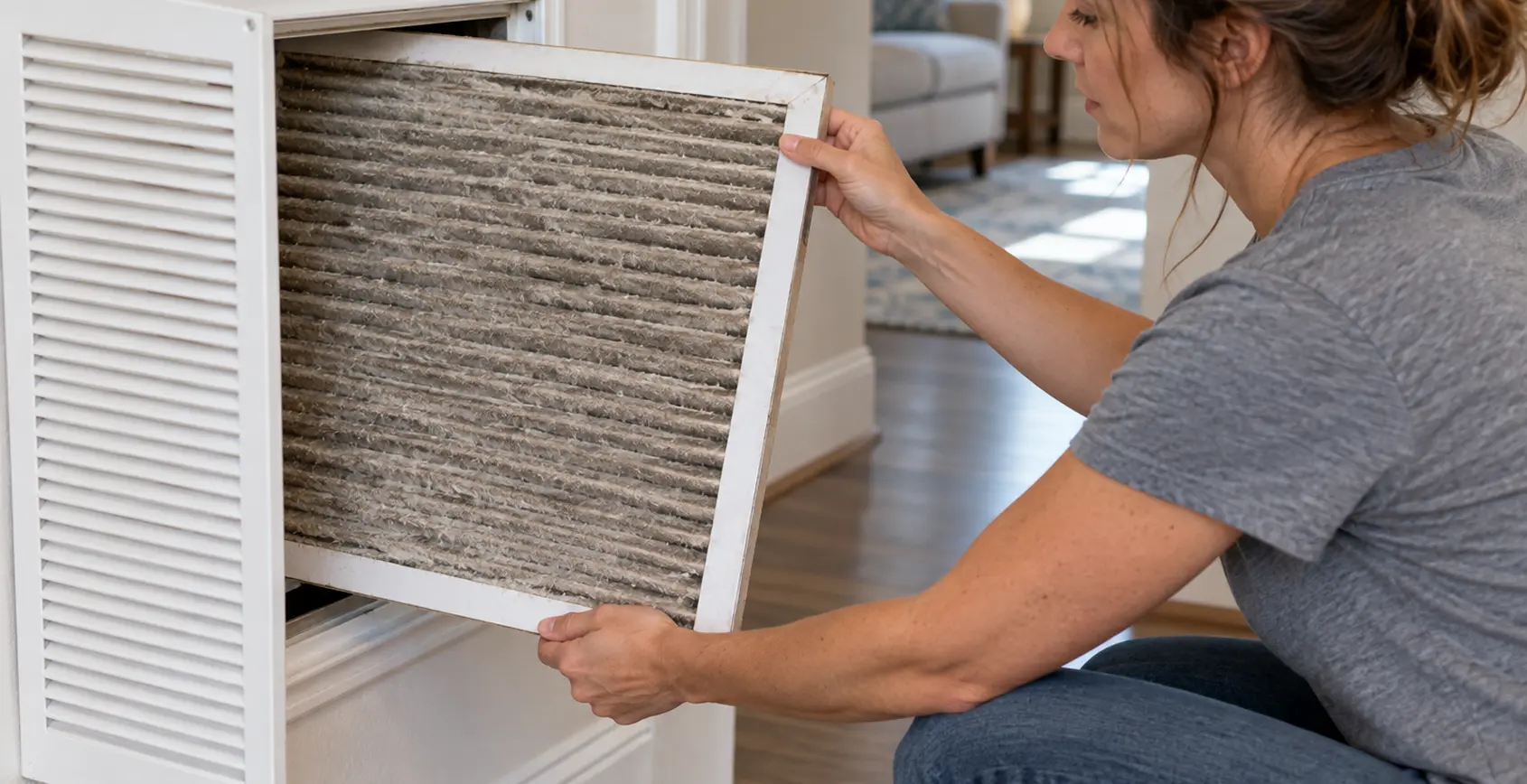
Your AC needs adequate airflow to move warm indoor air across the evaporator coil. When the filter becomes clogged with dust, pet hair, and other particles, less air reaches the coil.
With insufficient airflow, the coil can become colder than it should. Moisture in the air can then freeze on its surface.
A severely restricted filter can also make your AC work harder and reduce cooling performance.
What you can do
Check your air filter regularly and replace it according to the manufacturer’s recommendations or sooner if it becomes visibly dirty.
If replacing the filter doesn’t resolve the freezing problem, there may be another airflow or mechanical issue that requires attention.
2. Restricted Airflow Through the System
A filter isn’t the only thing that can restrict airflow.
Closed supply vents, blocked return vents, dirty ductwork, crushed ducts, or problems with the blower can all affect how much air moves through the system.
When airflow across the evaporator coil drops, the coil may become cold enough for condensation to freeze.
If only some rooms are getting weak airflow, or you hear unusual sounds from the air handler, it’s worth having the system inspected rather than assuming the problem is the filter.
3. Dirty Evaporator Coils
The evaporator coil absorbs heat from the indoor air. Over time, dust and debris can accumulate on the coil, particularly if the air filter hasn’t been maintained properly.
A layer of dirt can interfere with airflow and heat transfer. This can contribute to coil temperatures dropping below freezing and allow ice to develop.
A dirty coil can also reduce the system’s cooling efficiency.
Because accessing and cleaning the evaporator coil can involve working inside the air handler, professional service may be appropriate if the coil needs more than basic accessible cleaning.
4. Low Refrigerant
Low refrigerant is another common reason an AC may freeze.
Refrigerant circulates through the system and plays an important role in absorbing heat from indoor air. If the system has lost refrigerant because of a leak or another problem, the pressure and operating conditions can change.
This can cause the evaporator coil to become excessively cold, allowing moisture to freeze on it.
Signs that may accompany low refrigerant include:
- Ice forming on the refrigerant line or indoor coil
- Reduced cooling
- Longer cooling cycles
- Air that isn’t as cold as expected
- Unusual hissing sounds in some situations
- Increasing energy consumption
If low refrigerant is suspected, adding refrigerant without identifying the reason for the low level isn’t a complete solution. A qualified HVAC technician should diagnose the system and check for leaks or other problems.
5. A Blower Fan Problem
Your indoor blower fan moves conditioned air through the ductwork and across the evaporator coil.
If the blower isn’t operating correctly, airflow through the coil can decrease. This may happen because of a failing motor, electrical problem, damaged component, or another mechanical issue.
Reduced airflow can cause the coil temperature to fall enough for ice to form.
If you notice weak airflow from multiple vents along with ice on the AC, the blower and other airflow components should be checked.
6. Blocked or Closed Vents
Something as simple as blocked supply or return vents can affect system airflow.
Furniture, curtains, rugs, or other objects can obstruct vents. Closing too many supply vents can also alter airflow through the system.
While closing one vent occasionally isn’t necessarily enough to cause a frozen system, widespread airflow restriction can contribute to cooling problems.
Make sure supply and return vents are open and unobstructed. If airflow remains weak, the issue may be deeper within the ductwork or air-handling system.
7. Thermostat Problems
A thermostat tells the AC when to run based on the temperature setting.
If the thermostat isn’t reading temperature correctly or has another problem, the AC may run longer than it should.
Continuous operation doesn’t automatically mean the thermostat is defective, particularly during very hot weather. However, if the system keeps running without reaching the set temperature and ice is developing, the thermostat and overall system operation should be evaluated.
8. Running the AC When Outdoor Temperatures Are Too Low
Air conditioners are designed to operate within particular temperature ranges.
Running a conventional AC system when outdoor temperatures are unusually low can affect refrigerant pressure and system operation. In some circumstances, this can contribute to evaporator coil freezing.
This can be relevant during unusually cool weather or when an AC is being used for reasons other than normal summer cooling.
If your system freezes when outdoor temperatures are relatively low, have an HVAC professional determine whether the system is designed and configured for those conditions.
What Should You Do If Your AC Is Frozen?
If you see ice on your air conditioner, continuing to run it can make the problem worse.
Turn the cooling off
Set the thermostat to OFF so the compressor and cooling cycle stop.
If your thermostat has a fan setting, you can sometimes switch the fan to ON to help circulate air and speed up thawing. However, follow your system’s instructions and avoid operating the equipment if doing so causes unusual sounds or other problems.
Let the ice melt
Don’t try to chip, scrape, or break the ice away from the coil or refrigerant lines. Doing so can damage components.
Depending on the amount of ice, complete thawing may take several hours.
Check the air filter
Once you’ve safely stopped the cooling cycle, check whether the filter is dirty or clogged. Replacing a heavily soiled filter is a reasonable first step.
Don’t immediately restart the AC
If the system has a significant amount of ice, allow it to thaw completely before restarting it.
If the AC freezes again after restarting, that suggests an underlying problem that needs to be diagnosed.
Can You Run an AC With Ice on It?
It’s best not to continue running an AC that is visibly frozen.
The ice itself indicates that the system isn’t operating under normal conditions. Continuing to run it can allow more ice to accumulate and may place additional strain on the system.
Turning the cooling off gives the ice an opportunity to melt and allows you to check simple issues such as a dirty filter.
If the problem returns, professional diagnosis is the safer approach.
Why Does My AC Keep Freezing Up?
If you’ve replaced a dirty filter and the AC continues to freeze, the cause may be more complex.
Recurring freezing can point to:
- Refrigerant loss
- An airflow problem
- A dirty evaporator coil
- Blower problems
- Ductwork restrictions
- Thermostat issues
- Mechanical or electrical faults
Repeatedly thawing the system without addressing the underlying cause won’t prevent the problem from returning.
A technician can measure system pressures and temperatures, inspect airflow, check the evaporator coil and blower, and look for other issues affecting system performance.
Does Ice Mean My AC Needs More Refrigerant?
Not necessarily.
Low refrigerant can cause an AC to freeze, but ice alone doesn’t prove that the system is low on refrigerant.
Airflow restrictions, dirty components, blower problems, and other issues can produce similar symptoms.
That’s why refrigerant shouldn’t simply be added based on the presence of ice. If refrigerant is low, the system should be checked for the reason behind the loss and repaired appropriately.
How Can You Prevent Your AC From Freezing?
Regular maintenance can reduce the risk of many problems that contribute to frozen coils.
Replace air filters regularly
A clean filter helps maintain adequate airflow. Check your filter regularly and replace it when needed.
Keep vents unobstructed
Make sure supply and return vents aren’t blocked by furniture, curtains, or other objects.
Schedule professional maintenance
Routine HVAC maintenance can help identify dirty coils, airflow problems, electrical issues, refrigerant concerns, and worn components before they develop into larger problems.
Pay attention to changes in performance
Weak airflow, longer cooling cycles, unusual noises, warm air, or rising energy bills can all indicate that your AC needs attention.
Addressing these signs early may help prevent more serious cooling problems.
When Should You Call an HVAC Professional?
A frozen AC isn’t always an emergency, but recurring or severe freezing shouldn’t be ignored.
Call an HVAC professional if:
- The system freezes repeatedly
- The AC isn’t cooling properly
- You notice weak airflow
- You suspect a refrigerant leak
- The blower isn’t operating correctly
- The evaporator coil is heavily dirty
- The system makes unusual sounds
- The ice returns after thawing and replacing the filter
- You’re unsure why the system is freezing
A technician can determine whether the problem is related to airflow, refrigerant, electrical components, the blower, or another part of the system.
Keep Your AC Running Without the Ice
Ice on your air conditioner is a sign that something isn’t working as it should. A dirty filter or restricted airflow may be the cause, but refrigerant problems, blower issues, dirty coils, thermostat problems, and other conditions can also lead to freezing.
The first step is to turn off the cooling and allow the ice to thaw. Check the air filter and make sure your vents aren’t blocked. If the system freezes again, avoid repeatedly restarting it and have the underlying problem diagnosed.
Veteran Air can help if your Florida AC is freezing up, struggling to cool, or showing other signs of trouble. Our HVAC professionals can inspect the system, identify the cause of the ice buildup, and recommend the appropriate repair.
If your AC keeps freezing, contact Veteran Air to schedule an inspection and get your cooling system back to reliable operation.